LIMITED SPOTS
All plans are 30% OFF for the first month! with the code WELCOME303
LIMITED SPOTS
All plans are 30% OFF for the first month! with the code WELCOME303

LIMITED SPOTS
All plans are 30% OFF for the first month! with the code WELCOME303
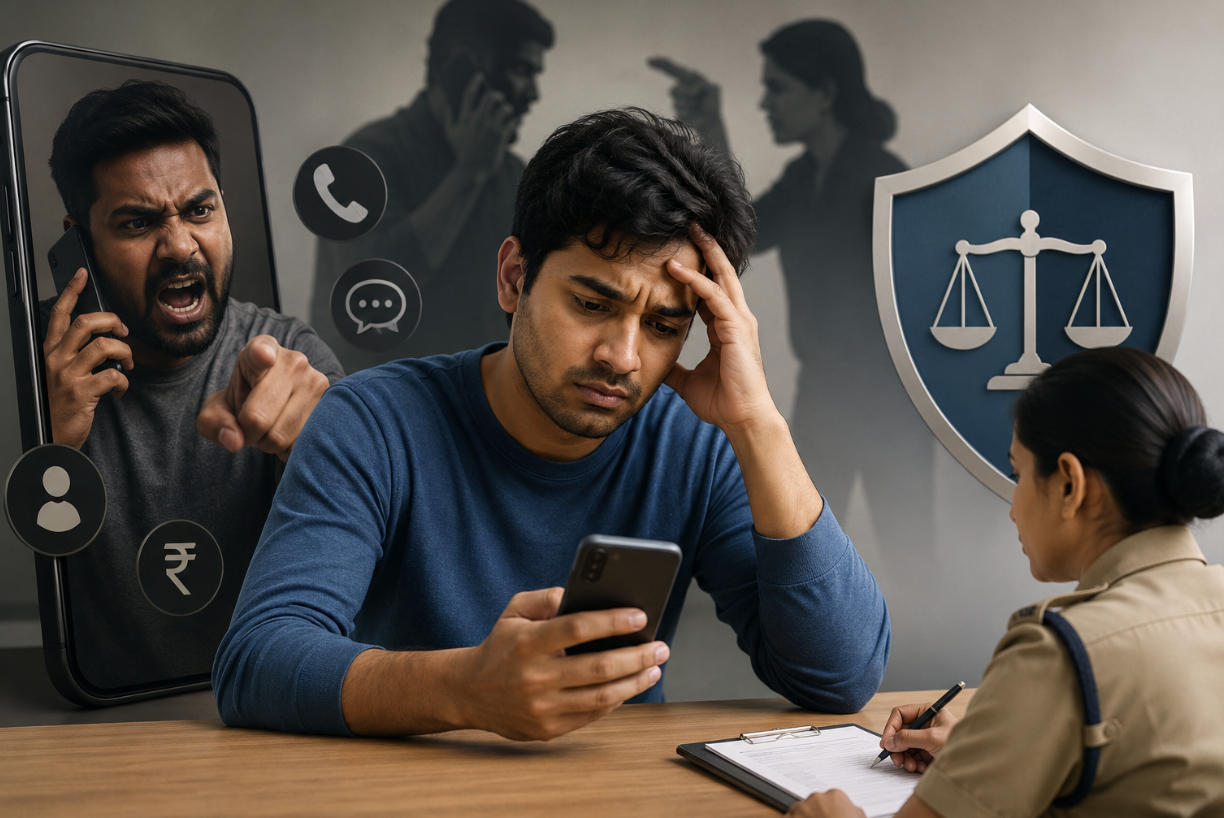
Synopsis: This blog explains what loan app harassment looks like legally, the rights you have as a borrower, where and how to file complaints, and how Cyber Crime Lawyers and online attorney advice can help you take the right action.
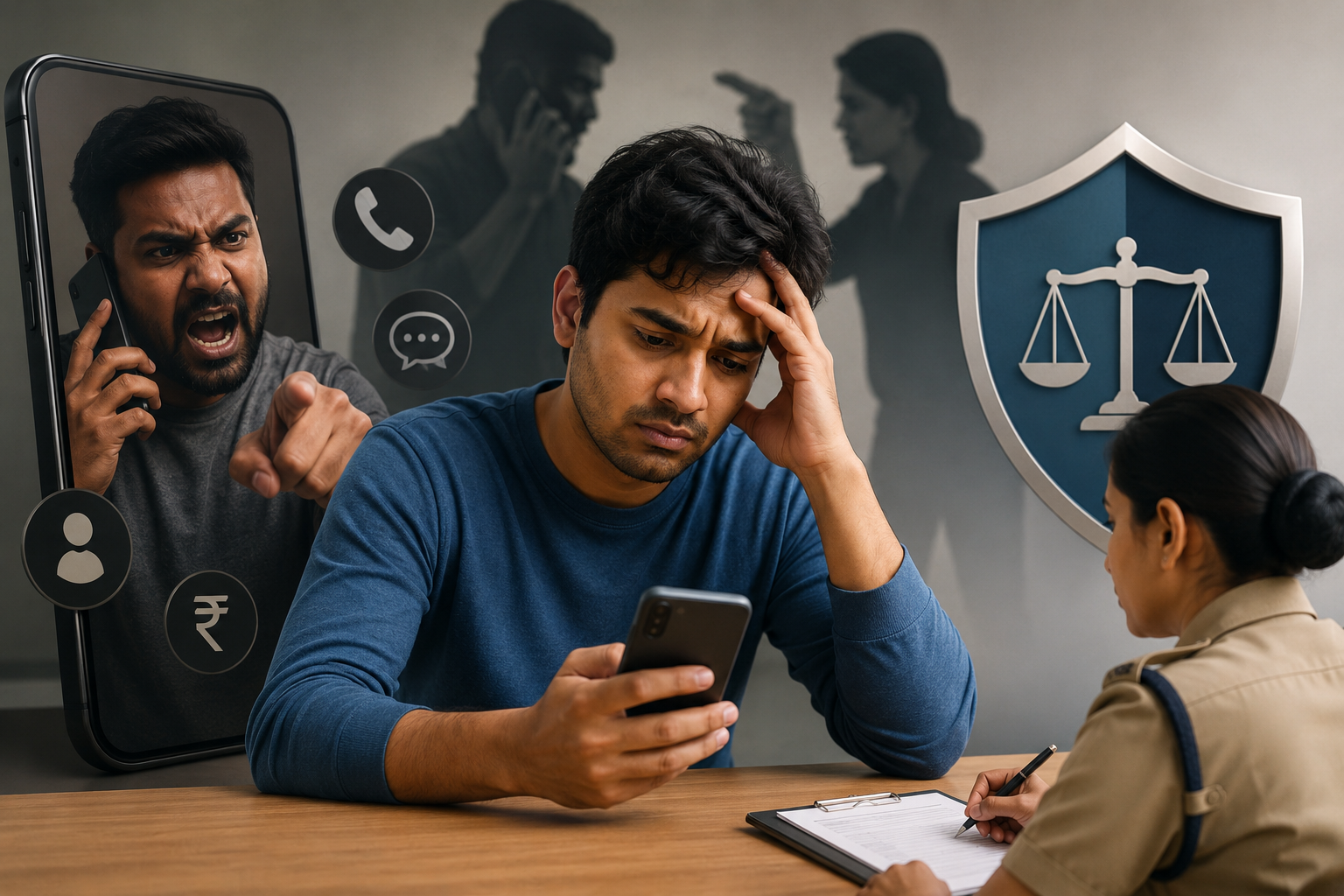
Your phone will not stop buzzing. Calls from unknown numbers at midnight. Messages to your contacts — your colleagues, your relatives, sometimes even your employer — telling them you have not repaid a loan. Threats disguised as reminders. Abuse dressed up as follow-ups.
If this is happening to you right now, two things are worth knowing immediately.
First, what these loan apps and their recovery agents are doing is illegal. Not just unethical. Not just aggressive. Illegal. Second, you have more legal options than you probably realise, and the people harassing you are far more vulnerable to legal action than they want you to believe.
This blog explains exactly what your rights are, where to complain, and how to make sure the complaint actually leads somewhere.
 Why This Is a Legal Problem, Not Just a Personal One
Most people who go through loan app harassment treat it as something to endure — embarrassing, stressful, but ultimately a private matter between them and a lender.
It is not.
When a recovery agent contacts people from your phone book without your consent, that is a violation of your privacy and a breach of RBI guidelines on digital lending. When they send threatening messages, that is criminal intimidation under the Indian Penal Code. When they access your contacts, photos, or personal data without authorisation, that is a violation of the Information Technology Act. When they defame you to your employer or family, that is defamation — actionable both civilly and criminally.
Every single one of these actions gives you a legal remedy. The harassment is not something you have to absorb. It is something you can — and should — respond to legally.
The Reserve Bank of India has issued clear guidelines on digital lending and recovery practices. These are not suggestions. They are binding on every entity operating a lending app in India.
Under RBI guidelines, digital lenders are required to:
Disclose all loan terms clearly before disbursement
Do not access a borrower's contacts, photos, or media beyond what is strictly necessary
Use only RBI-regulated entities for lending — not unregistered shell companies
Follow the RBI's Fair Practices Code for recovery, which prohibits harassment, intimidation, and public shaming
Ensure recovery agents operate within the law and do not contact borrowers or their associates outside reasonable hours
When any of these are violated — and in most loan app harassment situations, several of them are — the lender and its agents have exposed themselves to regulatory action, criminal complaints, and civil liability simultaneously.
Before filing a complaint, it helps to identify exactly which violations apply to your situation. Different violations go to different authorities, and being specific about what happened strengthens every complaint you file.
| What Is Happening | Legal Violation | Where to Complain |
| Contacts accessed without consent | IT Act, RBI guidelines | Cyber Crime portal, RBI |
| Threatening calls or messages | IPC Section 503, 506 | Police, Cyber Crime portal |
| Public shaming via social media | IPC Section 499, 500 | Police, Cyber Crime portal |
| Contacting employer or family | RBI Fair Practices Code | RBI, company's nodal officer |
| Morphed photos used to threaten | IT Act Section 66E, 67 | Cyber Crime portal, Police |
| Abusive language during calls | IPC Section 294 | Police |
| Loan terms not disclosed properly | RBI digital lending guidelines | RBI Ombudsman |
Going through this list against your own situation tells you immediately how many violations are in play — and most people in loan app harassment situations find that several rows apply at once.
1. National Cyber Crime Reporting Portal
For most loan app harassment cases, this is the first and most important place to go. Visit cybercrime.gov.in and file a complaint under the financial fraud or cyber harassment category.
Document everything before you file — screenshots of threatening messages, call logs, recordings if available, and examples of how your contacts were approached. The more specific and detailed your complaint, the faster it moves.
2. Your Local Police Station
For criminal violations — threats, intimidation, abuse, defamation — file an FIR at your local police station. Reference the specific IPC sections that apply to what happened. If the station is reluctant to register the FIR, you can approach the Superintendent of Police or directly file a complaint before a Magistrate.
3. RBI Ombudsman
If the loan app is operating through an RBI-regulated entity — or claiming to be — file a complaint with the RBI Ombudsman at cms.rbi.org.in. This covers violations of the Fair Practices Code, unauthorised data access, undisclosed loan terms, and recovery methods that breach RBI guidelines.
4. Google Play Store or Apple App Store
This is a step most people overlook entirely. Both platforms have strict policies against apps that engage in harassment or access data beyond what is declared. Reporting the app directly to the app store — with screenshots and a clear description of what happened — can result in the app being taken down.
5. Ministry of Electronics and Information Technology
MEITY handles complaints about apps and digital platforms that violate Indian data protection and IT laws. Filing here, alongside your cyber crime portal complaint, creates a broader regulatory paper trail that is harder for the operator to ignore.
Step 1 — Stop Engaging and Start Documenting
The moment you decide to take legal action, stop responding to the recovery agents entirely. Every response — even an angry one — gives them material to work with and muddies your complaint record.
Start documenting everything instead. Screenshot every threatening message. Record calls where possible — in India, single-party recording is generally permissible. Note dates, times, and the exact content of every communication. Document every instance where your contacts were reached and what was said to them.
Step 2 — Identify the App and the Entity Behind It
Many illegal loan apps operate behind multiple layers of shell companies or front entities. Before filing, try to identify the name of the app, the company name shown on the loan agreement if any, the bank account to which repayments were directed, and any registered business name associated with the app.
This information helps authorities track the actual operator — not just the individual recovery agents who are often low-level contractors with no real accountability themselves.
Step 3 — Consult Cyber Crime Lawyers Before Filing
Loan app harassment cases sit at the intersection of cyber law, criminal law, banking regulations, and consumer protection. Filing complaints across multiple authorities — cyber crime portal, police, RBI, MEITY — requires a coordinated approach, and the way each complaint is framed affects how seriously it is taken.
Online attorney advice from experienced Cyber Crime Lawyers helps you understand exactly which violations apply to your situation, which authorities to prioritise, and how to present your complaint in a way that moves rather than stalls.
Many people file complaints that go nowhere not because the violations were not real, but because the complaints were too vague, filed with the wrong authority, or missing the specific legal references that give enforcement agencies something concrete to act on.
Step 4 — File Simultaneously Across Multiple Platforms
Do not file one complaint and wait to see what happens. File across all relevant platforms at the same time — cyber crime portal, local police, RBI Ombudsman, and the app store. Each channel creates pressure from a different direction, and together they are considerably harder for the operator to ignore or dismiss than a single complaint filed in one place.
Step 5 — Follow Up Consistently
Complaints filed and forgotten rarely lead anywhere. Note the complaint reference numbers from every platform. Follow up at regular intervals. If the cyber crime portal complaint has not moved within a reasonable time, your lawyer can escalate it formally through the appropriate police hierarchy or approach the court for directions.
The legal consequences for operators of illegal loan apps and their recovery agents are more serious than most people — including the operators themselves — fully appreciate.
Under the Information Technology Act, unauthorised access to a person's device data carries up to three years' imprisonment. Using obscene or morphed images for harassment under Section 67 carries up to five years. Criminal intimidation under IPC Section 506 means up to two years. Defamation carries up to two years. Operating an unregistered lending entity in violation of RBI regulations exposes the company to regulatory sanctions, cancellation of any existing licences, and significant financial penalties.
When multiple violations stack up across a single case — as they typically do in loan app harassment situations — the cumulative legal exposure for the operator is substantial.
Most people dealing with loan app harassment have never filed a cybercrime complaint before. The portals feel unfamiliar, the legal provisions are unclear, and it is genuinely difficult to know which violations are actionable and which authorities are the right ones to approach.
Online attorney advice removes all of that uncertainty. You can speak with experienced Cyber Crime Lawyers from wherever you are — late at night when the calls are still coming in, early in the morning before another round of messages hits your contacts. Share screenshots, call records, and loan documents digitally and get a clear, specific action plan without stepping out of your home.
For something this stressful — where the harassment is ongoing and every day of delay means more calls and more damage to your relationships — that kind of immediate access to qualified legal guidance is genuinely valuable. Not as a comfort. As a practical tool for making the harassment stop.
Loan app harassment is not something you have to endure quietly while hoping it eventually stops. The people behind it are breaking the law — multiple laws, simultaneously — and they are counting on you not knowing that.
The complaints process exists. The legal provisions are clear. The authorities — cyber crime cells, RBI, police — are actively dealing with these cases. What makes the difference between a complaint that leads to action and one that disappears is how it is filed, where it is filed, and whether it is specific enough to give enforcement agencies something real to work with.
Cyber Crime Lawyers who handle these cases understand exactly how to build that complaint. Online attorney advice means you can access that support from wherever you are — quickly, practically, and at the moment you actually need it.
The harassment is illegal. Treating it that way — legally, systematically, with the right support — is how it stops.
 AI tools to find & convert leads.